

Tile Flooring Installation in Statesboro, GA | Large Format Tile Experts
Tile installation is fundamentally a substrate discipline. Porcelain does not flex, so any movement in the assembly beneath it transfers directly into the grout and then into the tile itself. We evaluate deflection against the L/360 standard, and L/720 where natural stone is specified. Large format tile, meaning any edge exceeding 15 inches, demands substrate flatness within 1/8 inch across 10 feet and mortar coverage exceeding 85 percent. We use medium-bed mortar and back-butter every piece to achieve that. Wet areas receive a bonded waterproof membrane rather than relying on the tile assembly alone.
Porcelain tile is the most durable surface available and the appropriate specification for bathrooms, kitchens, entries, and commercial floors throughout Bulloch County. We install for homeowners, renovation contractors, and commercial clients across Statesboro and the surrounding counties. Tile also takes longer than any other flooring we install, because thinset mortar and grout both require cure time before traffic resumes. We schedule that honestly during the estimate rather than compressing it afterward. A tile floor installed over an inadequately prepared substrate will telegraph that failure within eighteen months.
Licensed & Insured · 50+ years experience
Request A Free Quote!
Tell us what you need. We reply the same working day.
Porcelain and stone, set over substrates prepared correctly.
912-616-4723Why We are the Best flooring contractor in Statesboro, GA
Selecting a flooring contractor ultimately comes down to who actually shows up and who stands behind the installation afterward. We have installed flooring throughout Bulloch County for over 50 years, and the same crew handles your project from initial measure through final walkthrough. Subcontracted installation is where most flooring complaints originate, so we simply do not operate that way.
- Over 50 years delivering flooring installation, repair, and maintenance across residential and commercial properties throughout the region
- Full-service solutions including luxury vinyl plank, solid hardwood, engineered wood, porcelain tile, laminate, and broadloom carpet
- Skilled craftsmanship using precise installation methods including floating click-lock assemblies, full-spread glue-down, and traditional blind-nailed hardwood
- High-quality materials and factory-cured finishes selected to improve durability, appearance retention, and long-term dimensional performance
- Custom design options covering plank direction, seam placement, transition detailing, and stair treatments to match any interior
- Low-VOC adhesives and underlayment systems available on request for occupied residences, medical clinics, and sensitive environments
Get a written price for your tile project
Send us the rooms and the approximate square footage and we will schedule a free in-home measure. You receive one written number covering material, labor, subfloor preparation, and disposal of the existing floor. That figure does not move afterward unless demolition exposes structural damage nobody could reasonably have anticipated.
- Free in-home measure with no obligation
- Licensed & Insured throughout Georgia
- 50+ years installing across Bulloch County
Request A Free Quote!
Tell us what you need. We reply the same working day.
Benefits and Applications of Tile Flooring
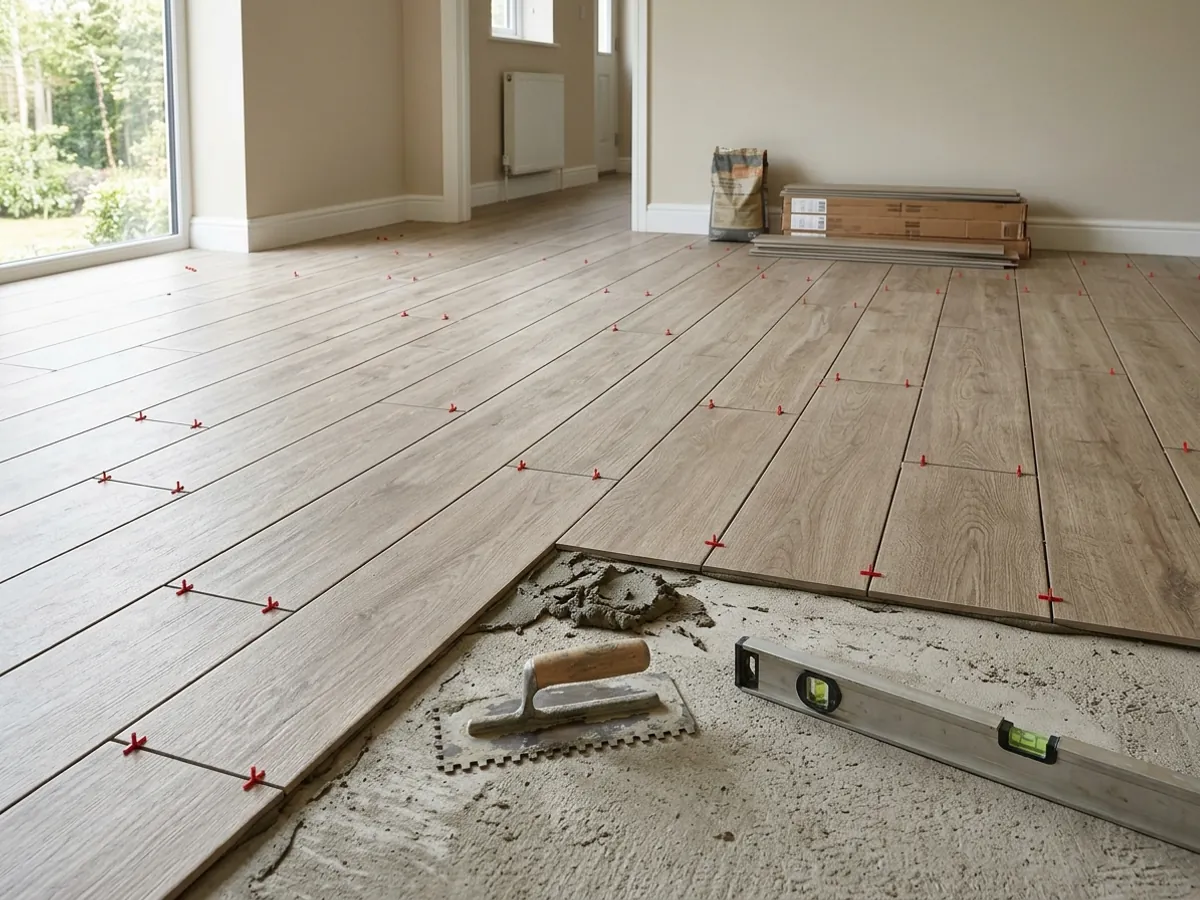
Nothing else we install matches porcelain for durability or water resistance. The constraint is always what sits underneath it.
Durability and Water Resistance
Porcelain absorbs less than 0.5 percent moisture by weight, which is what distinguishes it from standard ceramic. That density makes it genuinely waterproof and suitable for showers, entries, and exterior-adjacent spaces.
Surface hardness is equally significant. A properly installed porcelain floor routinely outlasts the fixtures and cabinetry surrounding it by decades. That longevity is why tile remains standard in entries and commercial vestibules.
Large Format and Design Options
Large format tile reduces grout joints substantially, producing cleaner sight lines and less maintenance. Formats of 12x24 and 24x48 now dominate residential specification for that reason.
Larger pieces demand tighter substrate tolerance. Flatness must fall within 1/8 inch across 10 feet, roughly twice the precision required for smaller formats. Lippage between adjacent tiles becomes visible immediately at those dimensions.
Wet Area Applications
Bathrooms, shower pans, and laundry rooms require a bonded waterproof membrane beneath the tile assembly. Tile and grout together are water resistant, not waterproof, and relying on them alone is how substrates rot invisibly.
We install sheet or liquid-applied membranes depending on the geometry, then flood test shower pans for 24 hours before setting a single tile. A failed pan discovered after tiling means demolishing everything above it.
Our Tile Installation Process
Tile punishes shortcuts more visibly than any other floor. Every stage below exists because skipping it produces a predictable failure.
Deflection and Substrate Assessment
We evaluate floor deflection against the L/360 standard for porcelain and ceramic, tightening to L/720 where natural stone is specified. Excessive deflection cracks grout first and tile shortly afterward.
Where framing is marginal we add blocking or an additional subfloor layer. Cement backer board or an uncoupling membrane then provides the bonding surface. Both approaches work, though uncoupling membranes add considerably less height at doorways.
Waterproofing and Uncoupling
Uncoupling membranes allow minor substrate movement without transferring stress into the tile above. Over concrete slabs with existing hairline cracking this is not optional, it is the only reliable approach.
Wet areas receive bonded waterproofing across the full floor and up the walls to the specified height. Shower pans get flood tested for 24 hours before tile setting begins. We photograph that test so there is a record if a warranty question ever arises.
Setting, Coverage, and Grout
Large format tile requires better than 85 percent mortar coverage, which means back-buttering each piece in addition to troweling the substrate. We periodically lift a set tile to verify coverage rather than assuming it.
Grout follows after the mortar cures, typically 24 hours later. Joint width follows the tile's rectified edge, generally 1/16 to 1/8 inch for rectified porcelain and wider for pressed edges. Narrower joints look cleaner but leave less tolerance for variation between tiles.
Types of Tile We Install
Material selection changes both the installation method and the maintenance obligation you inherit afterward.
Porcelain Tile
Porcelain is our default recommendation for nearly every application. Its sub-0.5 percent absorption rate and through-body color make chips far less conspicuous than on glazed ceramic.
Rectified porcelain is mechanically edge-ground after firing, permitting grout joints as narrow as 1/16 inch. That precision is what produces the near-seamless large format look. It also demands a flatter substrate, so preparation costs rise accordingly.
Ceramic Tile
Ceramic costs less and cuts more easily, making it reasonable for walls, backsplashes, and light-traffic residential floors. Its higher absorption rate and softer body limit it in demanding applications.
Glazed ceramic also chips more visibly, because the body color beneath the glaze differs from the surface. We steer customers toward porcelain for main traffic areas. The price difference between the two has narrowed considerably in recent years. We quote both where the application genuinely allows either one.
Natural Stone
Travertine, marble, and slate each demand tighter deflection tolerance at L/720 and require periodic sealing to resist staining. The maintenance obligation is genuinely higher than porcelain.
Stone rewards that effort with material variation no manufactured product replicates. We set expectations about sealing intervals clearly before anyone commits to it. Most stone floors need resealing every 12 to 24 months depending on traffic. Sealed stone in a low-traffic powder room can go considerably longer than a busy entry hall.
Why Statesboro Flooring Company Is the Best Tile Flooring Installation Expert
Local Expertise in Statesboro, GA
Older homes around downtown Statesboro sit over crawl spaces with framing that frequently does not meet modern deflection standards. We assess that before quoting tile rather than discovering it mid-installation. Newer slab construction presents the opposite problem, where hairline shrinkage cracking requires an uncoupling membrane to prevent telegraphing.
Professional Installers
Our installers back-butter large format tile and periodically lift a set piece to verify mortar coverage exceeds 85 percent. That verification step takes minutes and prevents the hollow spots that eventually crack under point loads. We flood test every shower pan for a full 24 hours.
Commitment to Customer Satisfaction
We schedule tile honestly, including the cure time that other contractors compress to win a job. You receive one written price covering substrate preparation, waterproofing, setting, and grout. Nothing gets added after demolition unless we find genuine structural damage first.
Frequently Asked Questions About Tile Flooring Installation
Installed porcelain tile ranges from $9 to $20 per square foot throughout Bulloch County. Labor accounts for more of that figure than material, because setting is slower than any other flooring method. Large format and natural stone price toward the upper boundary due to handling requirements and tighter tolerances. Waterproofing a shower or wet area adds $800 to $2,500 depending on geometry. Our in-home measure and written estimate carry no charge.
Porcelain is fired at higher temperature from denser clay, producing water absorption below 0.5 percent by weight. Ceramic absorbs considerably more and carries a softer body beneath its glaze. Porcelain suits floors, wet areas, and exterior-adjacent spaces, while ceramic works well on walls and light-traffic floors. The practical requirement for either is substrate deflection within L/360, verified before installation rather than assumed.
Tile takes longer than any other flooring we install. A standard bathroom generally runs three to five working days including waterproofing and cure time. A 500 square foot area typically requires four to six days. Thinset mortar cures roughly 24 hours before grouting, and grout needs another 24 to 72 hours before sealing. Uncoupling membrane installations are marginally faster than building up backer board.
Yes, over some substrates. Tile installs over existing ceramic, concrete, and properly prepared plywood provided deflection meets L/360 and the surface is flat within 1/8 inch over 10 feet for large format. Existing tile must be sound, fully bonded, and mechanically abraded first. The exception we do not recommend is tiling over cushioned vinyl or any floating floor, because the flex guarantees grout failure.
We specify through-body porcelain with a coefficient of friction rating appropriate to the space, typically 0.42 wet or higher for public floors. Through-body construction means chips do not expose contrasting material underneath. Retail floors, restaurant kitchens, clinics, and entry vestibules are common applications. High-traffic installations get epoxy grout, which resists staining and chemical cleaners far better than cementitious grout. Call and we will spec it properly.
Get a written tile price this week.
912-616-4723